
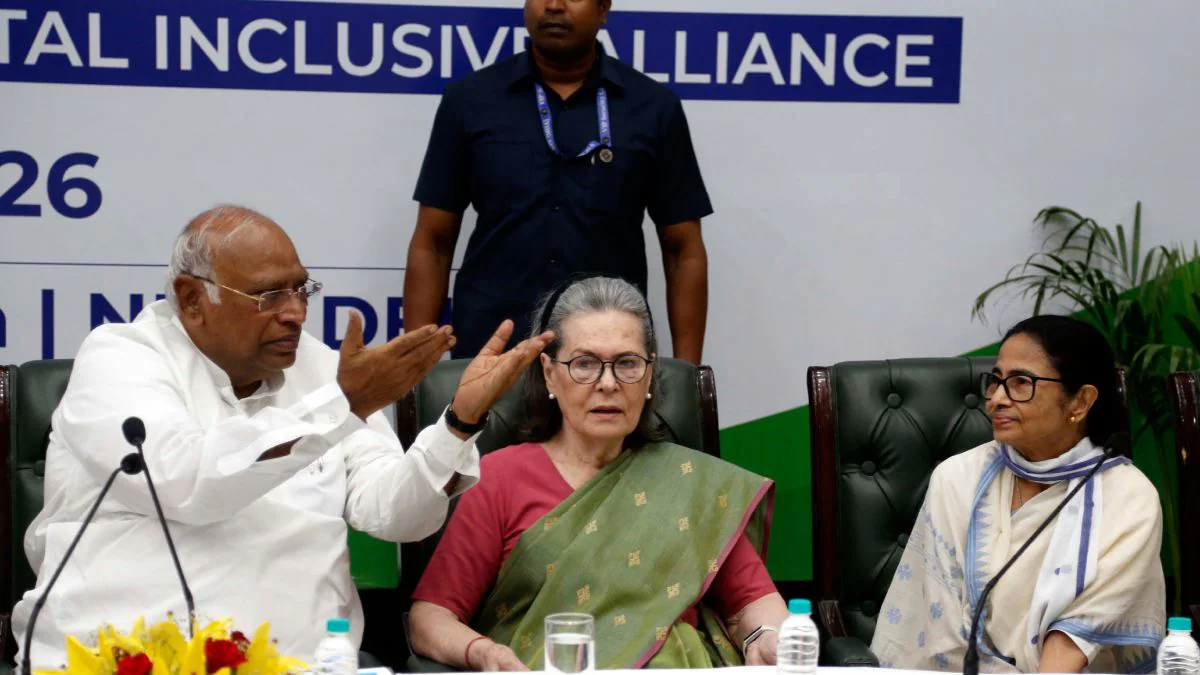
NEW DELHI — In its first formal and comprehensive gathering since the 2024 Lok Sabha elections, the opposition INDIA (Indian National Developmental Inclusive Alliance) bloc met on Monday at New Delhi’s Constitution Club. Seeking to reboot its political strategy and project unity amidst internal frictions and recent assembly poll setbacks, the alliance reached a consensus on a crucial five-point agenda designed to take on the ruling BJP government.
Addressing the media after the high-stakes huddle, Congress President Mallikarjun Kharge announced that 25 opposition parties participated in the deliberations, charting out an aggressive roadmap to hold the Union government accountable on multiple fronts.
“The INDIA alliance meeting has concluded, with 25 parties in attendance. Everyone shared their views, and subsequently, we reached a consensus on five points. We have agreed today; we will fight for these issues, work on them, and move forward,” Kharge stated, emphasizing the alliance’s commitment to addressing the immediate concerns of the public.
The Five-Point Action Plan
The agenda finalized by the INDIA bloc leadership focuses heavily on electoral integrity, educational mismanagement, economic distress, and internal alliance coordination. The five key points are:
1. Letter to the Chief Justice of India on Electoral Malpractice
The opposition has unanimously agreed to draft and send a formal letter to the Chief Justice of India regarding the Special Intensive Revision (SIR) of electoral rolls. Kharge alleged widespread “vote loot and election theft,” emphasizing that the fundamental integrity of the democratic process is under severe threat and necessitates the Supreme Court’s immediate intervention and oversight.
2. Demand for the Education Minister’s Resignation
In the wake of massive controversies surrounding the NEET and CBSE examinations, the INDIA bloc has demanded the immediate resignation of Union Education Minister Dharmendra Pradhan. The alliance leaders accused the minister of presiding over a deeply flawed system that resulted in catastrophic paper leaks and systemic mismanagement. Kharge characterized the situation as a “betrayal of lakhs of youth” whose academic futures and career prospects have been irreparably jeopardized.
3. Call for an All-Party Meeting on the Economy
Citing a “precarious” economic environment, the opposition resolved to demand that the Union government convene an urgent all-party meeting. The proposed agenda for this meeting includes pressing people-centric issues such as rampant unemployment, unyielding price rises, severe agrarian distress, and the alarming lack of new investments necessary for job creation. Kharge pointed out that the economic reality on the ground drastically contradicts the optimistic projections touted by the ruling party.
4. Bimonthly Alliance Coordination Meetings
To iron out internal differences and maintain a cohesive front, the alliance partners have agreed to hold formal INDIA bloc meetings every two months. The next huddle is tentatively scheduled for August 2026. This institutionalized meeting schedule is seen as a critical mechanism to prevent miscommunication, build trust, and rapidly address grievances among the regional heavyweights who form the backbone of the coalition.
5. Daily Strategy Sessions During Parliament
With the Monsoon Session of Parliament fast approaching, the bloc has decided to tighten its legislative strategy. “The Parliament coordination will continue during the monsoon session with daily morning meetings in the office of the Leader of the Opposition,” Kharge noted. This move aims to ensure a unified, impenetrable front against the treasury benches on a day-to-day basis, coordinating walkouts, debates, and legislative opposition.
Striving for Unity Amidst Visible Cracks
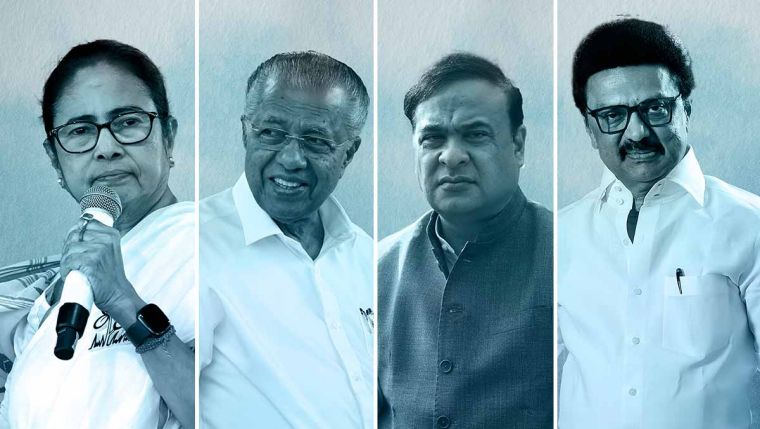
While the Congress aggressively projected unity by releasing photographs of the 25 participating parties—which included prominent heavyweights like Samajwadi Party’s Akhilesh Yadav, Trinamool Congress’s Mamata Banerjee, RJD’s Tejashwi Yadav, and virtual attendance by Shiv Sena (UBT) chief Uddhav Thackeray—the absences at the Constitution Club were glaring.
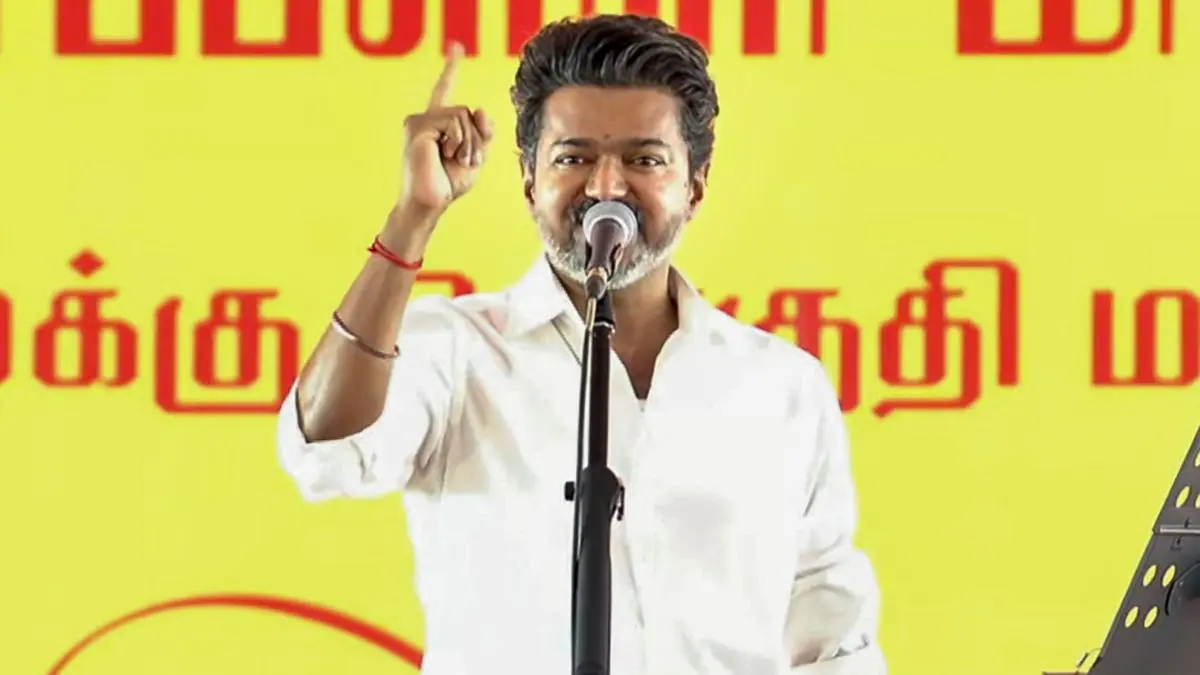
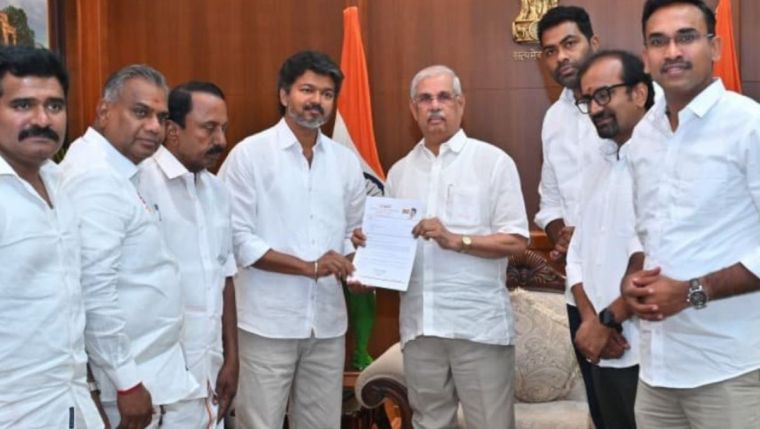
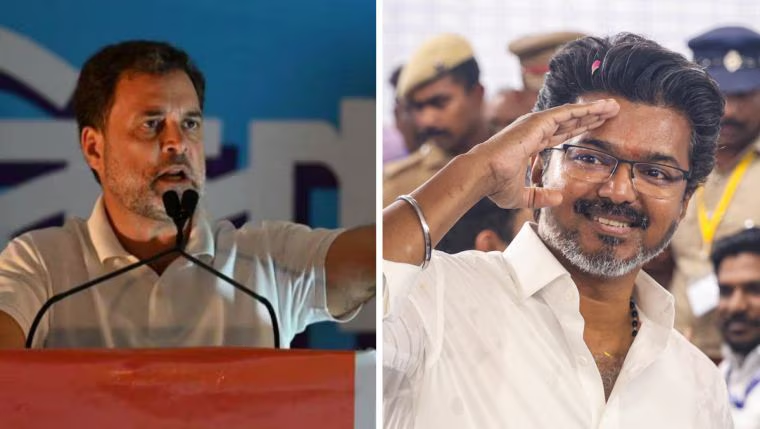
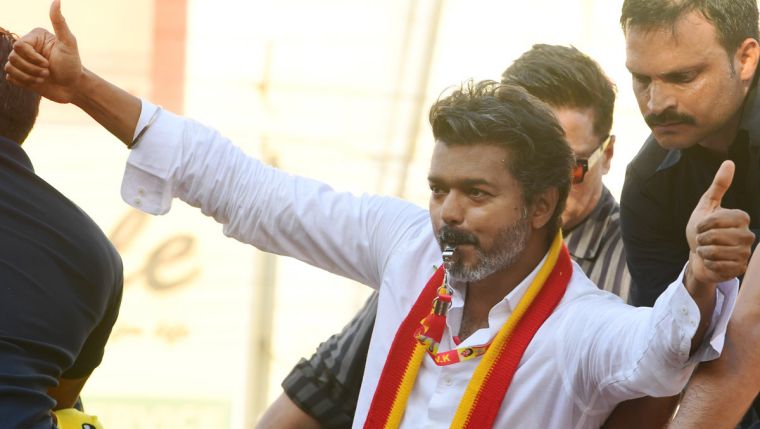
The Dravida Munnetra Kazhagam (DMK) and the Aam Aadmi Party (AAP) prominently skipped the meeting. The DMK’s boycott stems from deep-seated anger over what it perceives as a massive “betrayal” by the Congress in Tamil Nadu. Following a loss of power in the state assembly elections, the Congress reportedly aligned with actor-turned-politician Thalapathy Vijay’s newly formed Tamilaga Vettri Kazhagam (TVK) to form the state government, leaving its former ally, the DMK, sidelined.
Furthermore, tensions with the Left Front were palpable. Just days prior to the meeting, CPI(M) General Secretary M.A. Baby wrote a stern letter to Kharge, demanding clarification on the Congress leadership’s harsh campaign rhetoric against the Left during the recent Kerala elections. Baby warned that accusing the CPI(M) of colluding with the BJP in Kerala undermined the very foundation and mutual respect of the INDIA bloc.
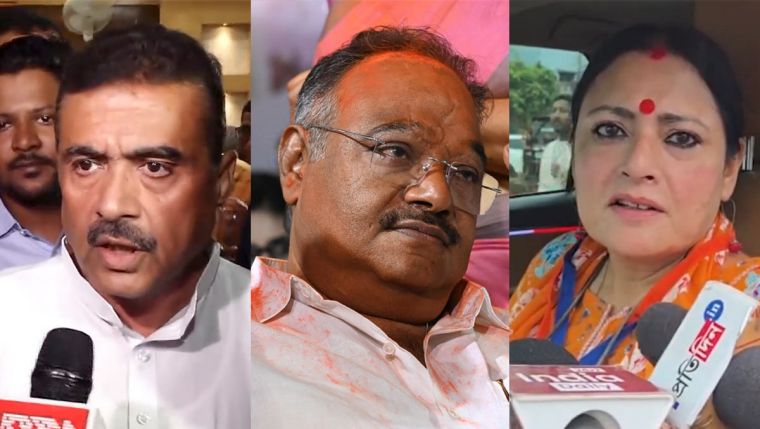
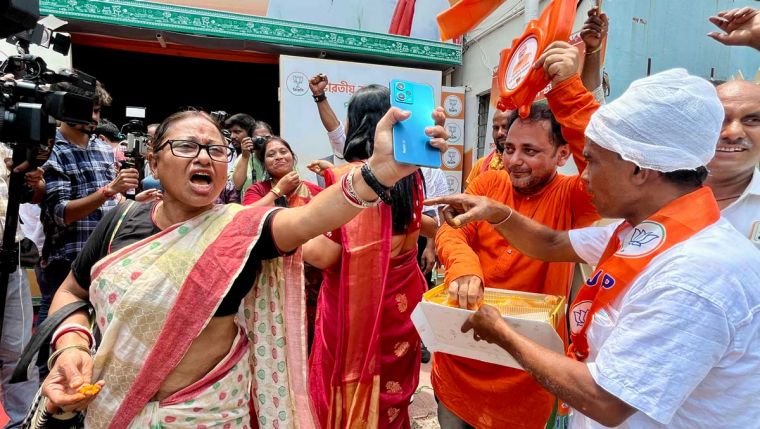
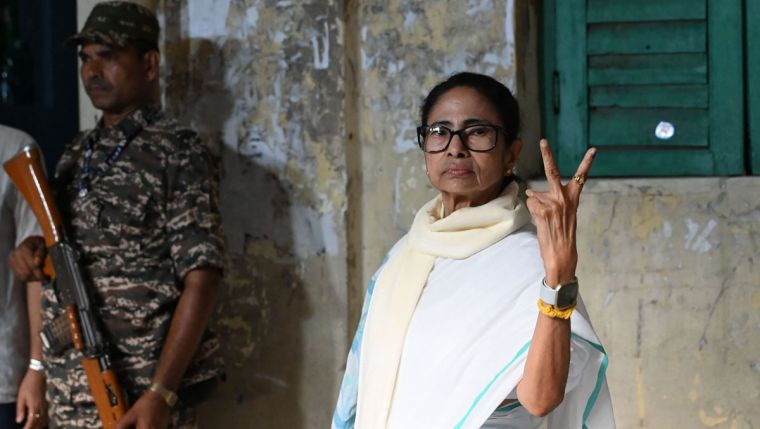
Even the Trinamool Congress, whose chief Mamata Banerjee made the trip to Delhi for the huddle, is grappling with intense internal turbulence. As the INDIA bloc convened, veteran TMC Rajya Sabha MP Sukhendu Shekhar Ray resigned from the party, following an unprecedented political revolt by 58 TMC MLAs in West Bengal just days prior, a direct fallout of the party losing power in the state to the BJP after a 15-year rule.
A Focus on Constitutional and Democratic Values
Despite these structural and regional challenges, Kharge used his opening remarks to pivot the focus back to the BJP’s alleged misgovernance. He highlighted a continuous “assault on the Constitution” and strongly condemned the central government’s alleged misuse of investigative agencies—like the Enforcement Directorate (ED) and the Central Bureau of Investigation (CBI)—as political tools to harass, intimidate, and bully political opponents.
Samajwadi Party chief Akhilesh Yadav echoed this sentiment, telling reporters that it was vital to safeguard democratic values and strive towards a “bandhu rashtra” (a nation of brotherhood). CPI General Secretary D. Raja also noted the immense significance of the meeting, remarking that the extended gap between physical gatherings made this strategic realignment crucial for the survival and effectiveness of the broader opposition space.
As the political chessboard for the 2029 general elections slowly begins to take shape, the INDIA bloc’s ability to execute this ambitious five-point agenda will be heavily scrutinized by both the media and the electorate. The immediate test of their resolve will unfold on the floor of the Parliament during the upcoming monsoon session, where their promised daily coordination will either forge a formidable opposition force or expose the fragile seams of a fractured political coalition.



Leave a Reply