
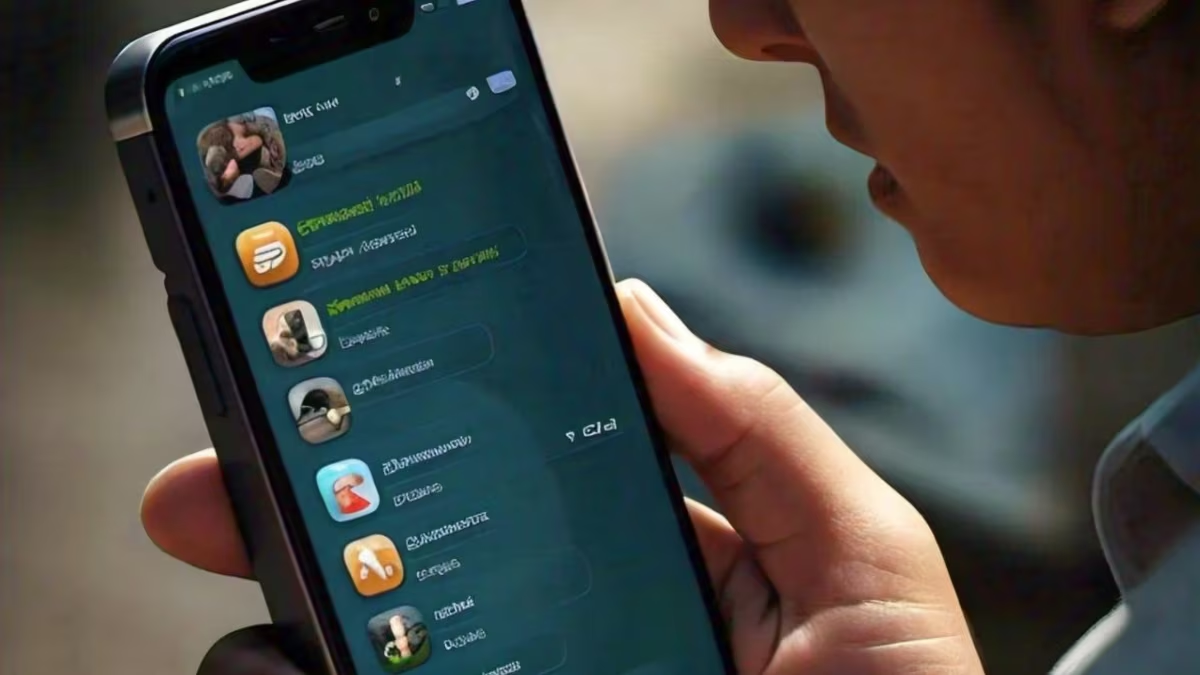
On June 15, 2026, the United Kingdom government took a decisive and unprecedented step in the global debate over digital child safety. In what Prime Minister Keir Starmer described as a move to “give kids their childhood back,” the government officially announced a comprehensive ban on social media access for anyone under the age of 16. The policy, heralded as the most significant overhaul of online safety rules in a generation, represents a massive cultural and legislative shift, effectively drawing a line in the sand against the escalating mental health crises fueled by the modern digital landscape.
The decision arrives after years of mounting pressure from bereaved parents, child psychologists, and online safety advocates who have relentlessly campaigned against the unchecked power of algorithmic feeds. While the concept of a youth social media ban has been floated globally, the UK’s approach—dubbed an “Australia-plus” model—goes significantly further than previous international attempts, establishing strict new boundaries that tech giants will be legally compelled to enforce.
The Scope of the Ban: What is Covered?
The core of the new legislation targets “user-to-user” platforms whose primary purpose is to enable social interaction and which allow users to post material that is then amplified and distributed by algorithms.
Under the new rules, the following major platforms will be strictly prohibited from offering their services to individuals under 16:
- TikTok
- Snapchat
- X (formerly Twitter)
- YouTube (excluding YouTube Kids)
- Reddit and Threads
However, the government has been careful not to sever children completely from the digital world. The legislation includes a narrowly defined list of exemptions to ensure that the ban does not interfere with daily digital utilities and basic communication.
What is Exempt?
- Direct Messaging Apps: Services like WhatsApp and Signal will not be included in the ban, ensuring children can continue to communicate privately with friends and family members.
- Educational Platforms: Sites and portals used for schooling, remote tutoring, and homework remain fully accessible.
- Entertainment and Commerce: Music streaming services, gaming storefronts, and e-commerce platforms are explicitly excluded from the social media definition.
Beyond Social Media: Livestreaming, Gaming, and AI
The UK government recognized that simply banning traditional social media would leave significant loopholes in child safety. As a result, the legislation introduces world-leading restrictions on specific harmful functionalities across a much wider range of online services.
First, the government is completely banning under-16s from livestreaming themselves across all platforms. Second, it is aggressively restricting “stranger communication” on gaming sites. While children will still be able to participate in online multiplayer games, the methods by which unknown users can contact, message, and talk to children will be systematically blocked.
Furthermore, the rapid rise of artificial intelligence has prompted the government to act preventatively. AI chatbots explicitly designed to simulate romantic or sexual relationships with users will be strictly restricted to individuals over the age of 18.
To prevent a sudden “cliff-edge” scenario—where teenagers are suddenly exposed to the unmoderated internet on their 16th birthday—the government confirmed that restrictions on livestreaming and stranger communications will remain on by default for 16- and 17-year-olds. Ministers are also currently reviewing the possibility of introducing digital overnight curfews and enforced breaks in highly addictive “infinite scrolling” feeds for all teenagers under 18.
The Driving Force: A Parental Mandate
The government’s aggressive regulatory stance is backed by overwhelming public support. During a massive public consultation that received over 116,000 responses from parents, industry experts, and children, an astonishing 9 in 10 parents expressed direct support for an under-16 social media ban.
Speaking from Downing Street, Prime Minister Keir Starmer framed the legislation as an ultimate intervention against corporate negligence. “Parents want to keep their kids safe and happy, but the online world has made that harder than ever,” Starmer stated. “Tech giants had their chance and failed, but we’re stepping in to protect children, back parents, and set a new normal for future generations.”
Technology Secretary Liz Kendall echoed these sentiments, noting that tech companies have had countless opportunities to implement meaningful safety measures voluntarily but have consistently chosen profit and user engagement over child welfare. For campaigners like Ellen Roome and the family of Molly Russell—teenagers who tragically took their own lives after being exposed to harmful online content—the ban is a hard-fought victory. “The tech companies, if they wanted to make changes, they could have done that by now,” Roome noted following the announcement. “They’ve chosen not to do it.”
The Enforcement Challenge: Can It Actually Work?
While the political will is undeniably strong, the technical reality of policing the internet remains a monumental hurdle. Starmer has stressed that the legal burden will fall entirely on the tech companies, not the youth. There will be no fines or penalties for resourceful teenagers who find workarounds; instead, platforms that fail to take reasonable steps to exclude underage users could face crippling, multimillion-dollar enforcement penalties.
The UK’s media regulator, Ofcom, has been tasked with overseeing the enforcement strategy and will be granted additional funding. A rapid study is currently underway to determine the most effective and secure methods for “age assurance” to reliably verify whether a user is over 16.
However, skepticism remains high among cybersecurity experts and digital rights groups. Critics point out that age verification tools are notoriously easy for tech-savvy teenagers to bypass using Virtual Private Networks (VPNs) or fake credentials. Furthermore, privacy advocates have raised alarms about the massive amounts of personal data that age verification companies will need to collect, store, and process to enforce the ban effectively.
Some safety campaigners argue that a blanket ban is actually a distraction from the root problem. Amnesty International labeled the decision the “right diagnosis, wrong prescription,” urging the government to focus on strong, enforceable algorithmic regulations—such as banning hyper-personalized recommendation systems—rather than outright restricting access. Tech giant Meta also released a statement arguing that blanket bans risk isolating vulnerable teens from crucial online communities and support networks.
Timeline and Next Steps
The UK government is moving aggressively to turn these proposals into actionable law. A full response to the public consultation, fleshing out the exact technical details and legal definitions of the policy, is scheduled for publication in July 2026.
The Prime Minister aims to pass the relevant legislation through Parliament before Christmas, with the complete suite of protections expected to officially come into force by Spring 2027. The world is now watching the United Kingdom. If successful, this bold legislation could serve as the definitive blueprint for global internet regulation, fundamentally altering the relationship between youth, technology, and corporate accountability












Leave a Reply