
Kolkata, April 29, 2026: West Bengal Chief Minister and Trinamool Congress (TMC) supremo Mamata Banerjee launched a sharp attack on the BJP on Wednesday, alleging that the party is attempting to “forcefully rig” the ongoing Assembly elections. Her accusations came as voters in the crucial second phase of the 2026 West Bengal Legislative Assembly elections cast their ballots across 142 constituencies.
Voting began at 7 AM on April 29 in seven districts covering key urban and semi-urban areas, including several high-profile seats in Kolkata such as Bhabanipur, where Mamata Banerjee herself is contesting. By 9 AM, an 18.39% voter turnout was reported, with expectations of another high-polling day following the record 92.7% turnout in the first phase on April 23.
Mamata Banerjee’s Early Morning Poll Booth Visits
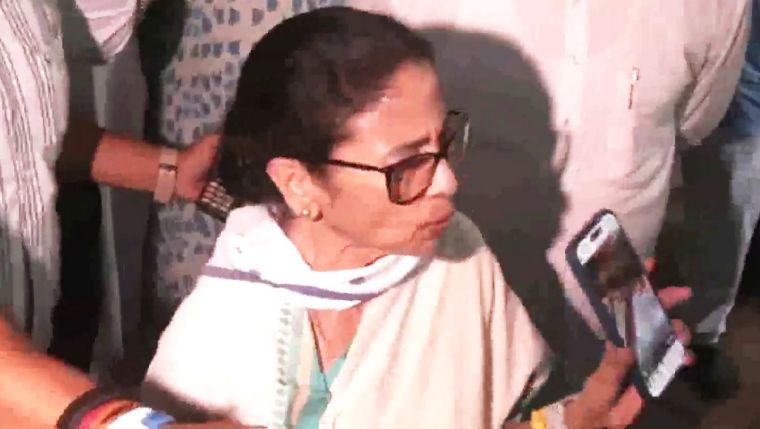
In a departure from her usual practice of voting later in the day, Mamata Banerjee left her Kalighat residence early and visited multiple polling stations in her Bhabanipur constituency. She first stopped at a booth in Chetla and also visited the residence of Kolkata Mayor Firhad Hakim, who is contesting from Kolkata Port.
Banerjee toured several booths in Bhabanipur to assess the ground situation personally. She is scheduled to cast her own vote in the evening at Mitra Institution in Bhabanipur. Her nephew and TMC MP Abhishek Banerjee had already voted around 8:30 AM at the same booth.
In a video statement issued during her visits, the Chief Minister alleged widespread irregularities. “Look how our worker was beaten up at night. Just look at this atrocity. What kind of hooliganism is going on?” she said, referring to an alleged incident in Bhangar, South 24 Parganas, the previous night.
She further claimed that TMC posters were being torn down in several areas and that her party’s polling agents were being harassed by central forces. “The intention is very clear. BJP wants to forcefully rig elections. Our workers and people are ready to die, but they will not give up,” Banerjee asserted.
Allegations of Violence and Targeting
Mamata Banerjee accused the Election Commission of deploying observers and police personnel from outside the state who “do not understand Bengal.” She claimed her party was being specifically targeted and said she had stayed awake all night monitoring the situation.
“I want elections to take place peacefully. The common man has been given their democratic rights,” she added, while expressing concern over the role of Central Armed Police Forces (CAPF).
The second phase sees the deployment of 2,343 companies of CAPF across the 142 constituencies, with Kolkata alone receiving 273 companies. The Election Commission has emphasised stringent security measures to ensure free and fair polling, especially after reports of violence and vandalism in the early hours of the first phase.
Minor EVM malfunctions were reported at some booths on Wednesday morning, but officials said these were resolved quickly, and voting resumed without major disruption.
High Stakes in Bhabanipur and Kolkata Seats
The second phase is particularly significant as it includes Bhabanipur, Mamata Banerjee’s traditional stronghold, where she faces a high-profile contest. BJP leader and Leader of Opposition in the outgoing Assembly, Suvendu Adhikari, is contesting from an urban seat for the first time, adding to the political intensity.
TMC currently holds all 11 urban assembly seats in Kolkata and is confident of retaining its dominance in the second phase, which covers important constituencies such as Kasba, Jadavpur, Behala Purba, Behala Paschim, Ballygunge, Rashbehari, and several others in Howrah and North 24 Parganas.
Abhishek Banerjee expressed strong confidence in TMC’s prospects, stating that people should vote with their “heads held high.” He predicted a “huge mandate” for Trinamool Congress and claimed the BJP would be reduced to around 50 seats.
In contrast, Suvendu Adhikari highlighted the “tight security” ensured by the Election Commission as a positive development compared to previous elections.
Background: West Bengal Assembly Elections 2026
The 2026 West Bengal Assembly polls are being held in two phases to elect all 294 members of the state legislature. The first phase on April 23 covered 152 constituencies across several districts, recording an impressive 92.7% voter turnout.
The second and final phase on April 29 involves 142 seats spread across seven districts, including key urban pockets in and around Kolkata, Howrah, and parts of South and North 24 Parganas, Nadia, and Hooghly regions.
Counting of votes for both phases is scheduled for May 4, 2026. The elections are seen as a crucial test for Mamata Banerjee’s TMC, which has been in power since 2011 and is seeking a fourth consecutive term. The BJP, which made significant gains in 2019 Lok Sabha polls and emerged as the main opposition in 2021, is aiming to capitalise on anti-incumbency and consolidate its position.
Issues dominating the campaign include governance, development, law and order, infiltration concerns, and welfare schemes. Both parties have accused each other of intimidating voters and misusing state machinery.
Security and Administrative Measures
The Election Commission has taken extensive steps to maintain peace, including the large-scale deployment of central forces. Special observers have been appointed, and strict instructions have been issued to prevent any form of booth capturing, bogus voting, or violence.
Despite the heightened security, political temperatures remain high, with TMC leaders repeatedly raising concerns about central agencies and forces acting at the behest of the ruling party at the Centre.
Political analysts note that the second phase, particularly the Kolkata urban seats, will play a decisive role in determining the overall outcome. A strong performance by TMC in its traditional strongholds could pave the way for another comfortable majority, while any significant dent by BJP or other parties could signal a shifting political landscape in the state.
What Voters and Parties Are Saying
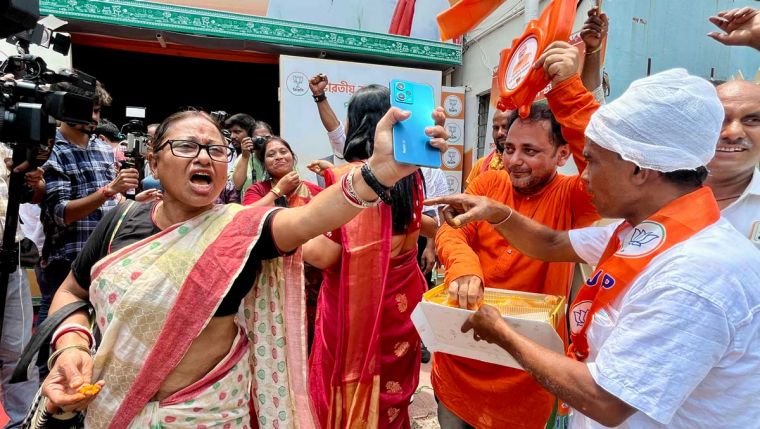
As polling progressed through the day, long queues were seen at many booths, reflecting the high enthusiasm among voters. TMC supporters expressed faith in Mamata Banerjee’s leadership and her welfare schemes, while opposition voices highlighted demands for better law and order and development.
The Chief Minister’s personal visits to booths in Bhabanipur underscore the importance her party attaches to this phase. Her allegations of rigging attempts have further intensified the already charged political atmosphere in the state.
With results expected on May 4, all eyes are now on how the remaining hours of polling unfold and whether the high security arrangements succeed in ensuring a largely peaceful voting process.
This second phase not only decides the fate of 142 assembly seats but also sets the tone for the final verdict on who will govern West Bengal for the next five years.






Leave a Reply