
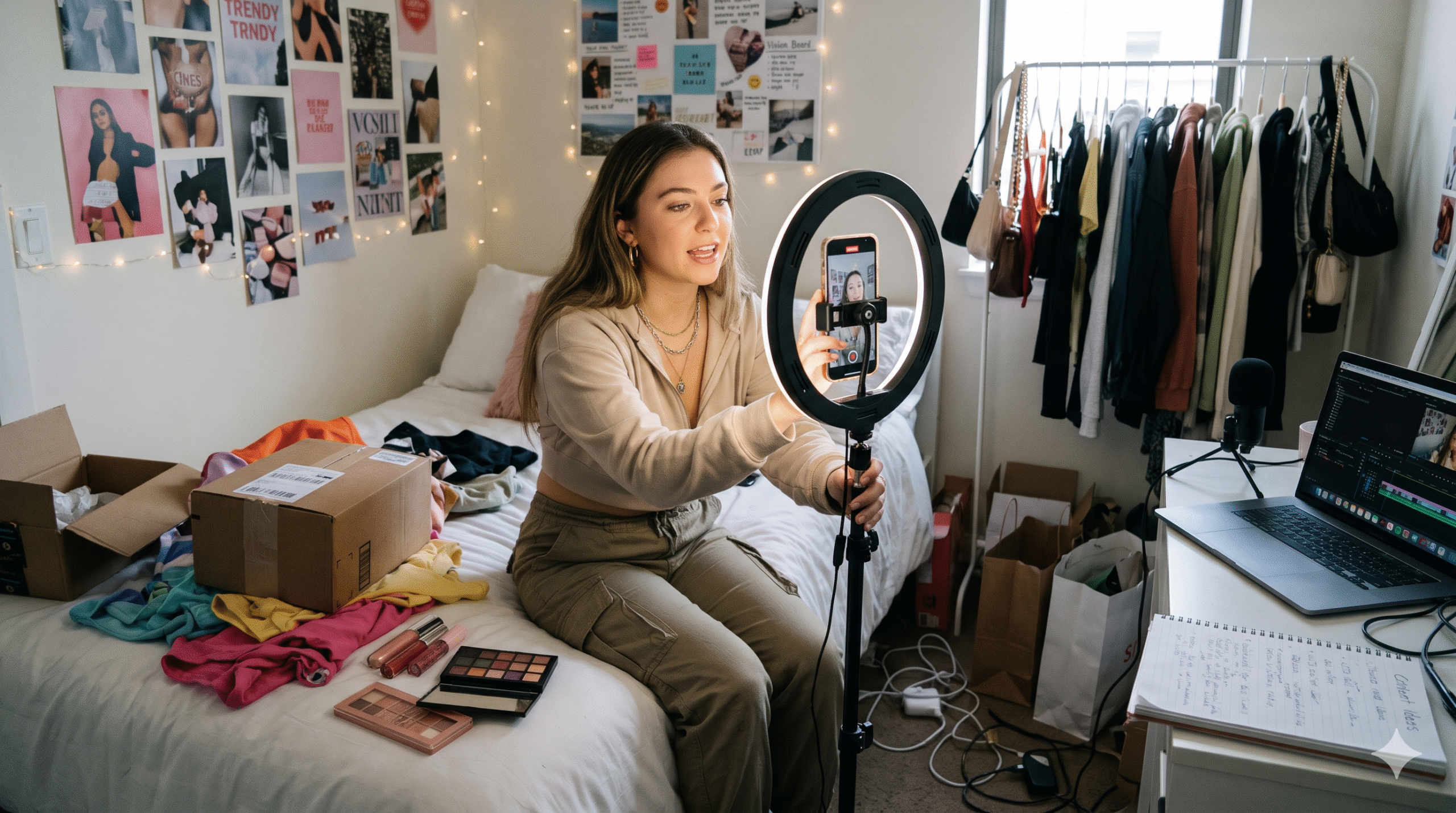
Millions chase online fame, but only a fraction turn likes, views and followers into a sustainable livelihood.
Social media has created a fascinating illusion of easy money. Open Instagram, Facebook or YouTube, and you will find people displaying expensive cars, foreign holidays, luxury homes and screenshots of impressive monthly earnings. Their message is often simple: Quit your job, become a content creator and earn lakhs from your mobile phone.
For millions of young people, this dream has become irresistible. But there is an uncomfortable question that rarely gets asked: If social media is such an easy money-making machine, why are so many creators still struggling to earn a decent income?
The reality is far less glamorous than the pictures and videos suggest.
The big gap between popularity and income
India’s creator economy is expanding rapidly, but financial success is concentrated among a relatively small group.
According to Kofluence’s 2024–25 influencer marketing report, India has an estimated 35–45 lakh influencers. Yet only around 4.5–6 lakh creators are estimated to monetise their content. More than half earn less than 25% of their total income through social media. Only 12% depend on social platforms for at least 75% of their livelihood.
These figures expose a major misconception: having an audience does not automatically mean having an income.
A person may have 50,000 followers and still struggle to earn ₹5,000 in a month. Another creator with just 5,000 highly engaged followers may earn more through local business promotions, affiliate marketing or specialised services.
The difference is not necessarily popularity. It is the ability to convert attention into paying customers.
The illusion of viral success
Consider two hypothetical examples.
Example 1: The viral Instagram creator
A young person uploads comedy reels and suddenly one video receives 2 million views. Followers increase from 3,000 to 40,000. Friends congratulate the creator, and people start calling them an influencer.
But what happens next?
The video goes viral, but there are no regular brand offers. The next ten videos receive only 2,000–5,000 views each. There is no guaranteed monthly payment from Instagram simply because one reel became popular.
The creator has achieved visibility, not financial independence.
Example 2: The less famous YouTuber
Another person runs a small educational YouTube channel with 15,000 subscribers. The videos explain competitive examinations, computer skills and career opportunities.
The channel may not produce millions of views, but its audience is specific and interested. The creator earns through advertisements, paid courses, sponsorships and affiliate links.
Despite having fewer followers, this creator may have a more sustainable business.
This illustrates an important lesson: a million views can create excitement, but a thousand genuinely interested viewers can sometimes create better business opportunities.
Followers do not pay electricity bills
One of the biggest misunderstandings among aspiring influencers is the belief that followers directly translate into money.
They do not.
Instagram followers are not a salary. Facebook likes are not a bank balance. YouTube subscribers are not guaranteed customers.
Income depends on several factors:
- Audience engagement and trust.
- Content category and audience location.
- Advertiser demand.
- Consistency and quality.
- Brand collaborations.
- Affiliate sales and product conversions.
- Platform monetisation eligibility.
A creator discussing personal finance, technology or education may attract different advertisers and commercial opportunities from someone posting general entertainment videos.
Even then, earnings are not guaranteed.
The hidden business behind influencer income
What viewers often see is a creator receiving a payment for one promotional video. What they do not see is the business machinery behind that payment.
A sponsored post requires negotiation, planning, scripting, filming, editing, revisions and sometimes multiple rounds of approval.
A creator may receive ₹10,000 for a promotional video, but that is not necessarily ₹10,000 in profit. Production expenses, travel, equipment, editing, taxes and agency commissions can reduce the actual earnings.
Moreover, brand collaborations are not regular salaries. A creator might receive three promotional offers in one month and none in the next two months.
According to the 2025 Kofluence report, 47% of creators rely primarily on sponsored collaborations, while only 15% depend mainly on platform advertising revenue.
This means that many influencers are effectively running small advertising businesses rather than earning a fixed income from social media platforms.
The expensive side of becoming a creator
Another uncomfortable reality is the cost of maintaining an online image.
Some aspiring influencers purchase expensive phones, cameras, lighting equipment, fashionable clothes and travel packages in the hope of producing attractive content.
Others spend money on paid promotions, editing software and even artificial followers.
The result can be financially disastrous.
Imagine someone spending ₹30,000 on equipment, ₹10,000 on promotions and another ₹5,000 every month on content production without having a clear monetisation strategy.
After six months, the person may have thousands of followers but no meaningful income.
Worse, the pressure to maintain a glamorous online identity can encourage unnecessary borrowing and spending.
The audience sees the lifestyle, not the credit-card bills behind it.
The platform controls the game
Creators also face a risk that traditional employees rarely experience in the same way: dependence on algorithms.
A Facebook page that once reached thousands of people organically may suddenly experience declining reach. An Instagram account may receive fewer views despite regular uploads. A YouTube channel may lose momentum because viewers move towards other formats.
Platform policies, recommendation systems, advertising demand and monetisation rules can change.
A creator does not own the platform or control its distribution system. Even an established account can experience a sudden decline in visibility and earnings.
This makes depending entirely on one social media platform a risky financial decision.
So, can ordinary people actually earn?
Absolutely. But they need to approach social media as a business, not a lottery.
A small-town creator can earn through local business promotions, restaurant reviews, educational content, regional news, affiliate marketing and digital services.
For example, an Odia-language creator could build an audience around Odisha tourism, local employment information, agriculture, education or regional culture.
Instead of chasing random viral videos, the creator could develop a trusted audience and generate income through relevant advertising, sponsorships and services.
The most sensible approach is to build multiple income streams:
- YouTube advertising revenue.
- Instagram and Facebook brand collaborations.
- Affiliate marketing.
- Paid partnerships with local businesses.
- Digital products, courses or services.
- Independent websites and newsletters.
The objective should be to build a business that uses social media for reaching customers, rather than allowing social media to become the only source of income.
Stop selling dreams; start understanding economics
The social media industry has created genuine opportunities. It has given talented people from small towns and ordinary families a chance to reach millions without traditional media connections.
That achievement should not be underestimated.
But the industry also has a dangerous side. Thousands of people are encouraged to believe that becoming famous is equivalent to becoming financially successful.
It is not.
A creator with 10 lakh followers may struggle financially, while a relatively unknown creator running a profitable digital business may quietly earn a comfortable living.
Young people should not abandon education, employment or professional skills simply because someone on Instagram claims to earn ₹5 lakh every month.
Before quitting a job, they should calculate their actual income, expenses, savings and consistency of earnings over several months.
Social media is an opportunity, not an employment guarantee. Virality is not a business model, followers are not assets unless they create value, and online popularity is not proof of financial success.
Perhaps the biggest lesson of the digital age is this: Do not judge a person’s wealth by what they display on a screen. Judge their success by what they actually earn, what they save and whether their income can survive when the camera stops recording.
Because behind every glamorous social media success story, there is a financial reality that the audience rarely gets to see.



Leave a Reply